Corrugates Sheets VS Ordinary Plastic Board: Structure, Advantages and Wide Application
Corrugated sheet, also known as all-purpose panels, represents a special category of extruded plastic materials that differ structurally from conventional solid plastic boards.
Most products are made of PP and PE resins with a hollow lattice cross-section.
They possess the natural advantages of plastics: light weight and anti-corrosion performance.
The hollow structure further provides excellent strength and shock resistance. It also delivers reliable heat insulation and sound insulation effects.
PC sunlight corrugated sheet serves as a high-transparency alternative for construction, yet PP/PE corrugated sheet dominates broader market scenarios.
Manufacturers favor corrugated sheet as an eco-friendly alternative to cartons and wooden boards.
They have unique advantages of waterproof performance and recyclability.
Manufacturers can customize their functional properties, including antistatic performance and flame retardancy.
This article compares corrugated sheets with ordinary plastic boards. It analyzes their core competitive strengths over traditional packaging materials.
It also discusses their wide-ranging applications in industrial packaging, architectural design, advertising, and daily consumption.
Difference Between Corrugated Sheets and Regular Plastic Boards
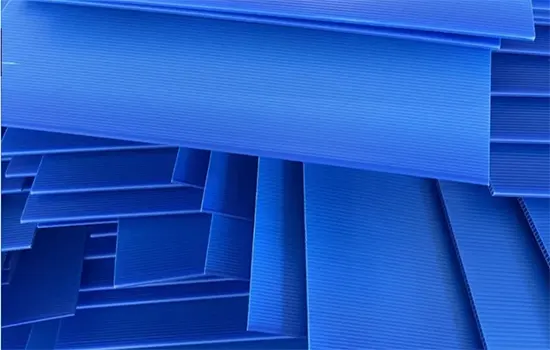
Manufacturers produce corrugated sheets, also called all-purpose panels or lattice panels, from resin materials including polypropylene (PP) and polyethylene (PE) via extrusion molding to form a hollow structure.
Their cross-section features continuous hollow channels resembling the Chinese character “工” or a “lattice” pattern; it is precisely this unique structure that gives them superior properties not found in ordinary plastic panels.
Simply put, it is like a “plastic honeycomb panel”—hollow in the middle with flat surfaces on both sides.
This design allows it to retain the corrosion resistance and lightweight advantages of plastic while achieving high strength, impact resistance, and thermal and acoustic insulation through its hollow structure.
It’s worth noting that corrugated sheets also have a “high-end counterpart”—polycarbonate (PC) corrugated sheets, commonly known as “sunlight panels.”
PC corrugated sheets offer extremely high transparency and are frequently used in architectural applications such as greenhouses and skylights.
However, today we’ll focus primarily on PP/PE corrugated sheets, which have a much wider range of applications.
“Superpowers” of Corrugated Sheets: Why It Can Replace Cardboard Boxes and Wooden Boards
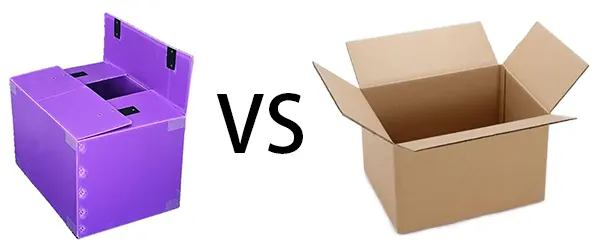
Compared to traditional packaging materials, the advantages of honeycomb panels are almost in a league of their own:
Waterproof and Moisture-Resistant
Waterproof and moisture-resistant—say goodbye to “collapsed cardboard boxes.”
Cardboard boxes are highly vulnerable to water; their strength drops dramatically when exposed to moisture.
Honeycomb panels, however, do not absorb water at all and maintain stable physical properties even in humid environments or during cold-chain logistics.
This is crucial for the transportation of fresh fruits and vegetables, as well as pharmaceutical products.
Lightweight, High-Strength, Impact-Resistant, and Crush-Resistant
Hollow-core panels are lighter than solid plastic panels of the same thickness, yet their impact resistance and toughness far exceed those of cardboard and wooden pallets.
Even when a hollow-core panel crate loaded with heavy items falls from a height, it effectively protects the contents from damage.
Reusable, Eco-Friendly, and Cost-Effective
Hollow-core panels are recyclable, aligning with global environmental trends.
More importantly, corrugated sheets deliver a service life 15 to 100 times longer than cardboard boxes and support reuse more than 100 times.
Although the initial purchase cost is higher than that of cardboard boxes, the cost per use is actually lower when averaged over multiple uses.
Customizable Features: Anti-static and Flame-retardant Options Available
Manufacturers incorporate functional masterbatches into raw materials during production to endow honeycomb panels with specialized properties, including antistatic, conductive, and flame-retardant performance.
This makes them the “go-to choice” for industries such as electronic components, precision instruments, and chemical products.
From Factories to Construction: Where Are Corrugated Sheets Used?
You might be surprised to learn that the range of applications for corrugated sheets is far broader than you might imagine.
Industrial Packaging: The Undisputed “Workhorse”
This is the most established application for hollow boards.
Common hollow board products such as storage bins, dividers (knife cards), and padding are widely used in industries including automotive parts, electronics and appliances, machinery manufacturing, pharmaceuticals, and food.
In the electronics industry in particular, anti-static corrugated sheet storage bins effectively eliminate static electricity and protect sensitive electronic components.
Architecture and Creative Design: More Than Just Packaging Material
You might not realize it, but hollow board can even be used to “build houses.”
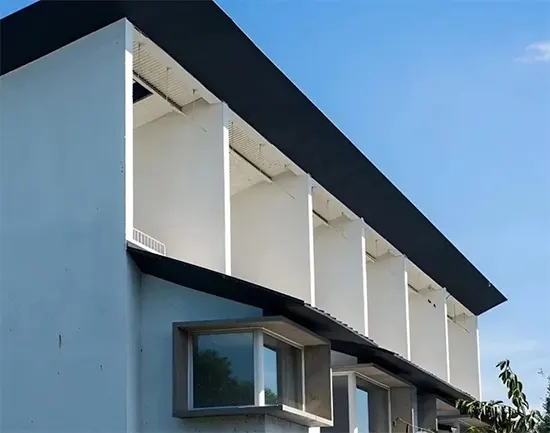
At the “International Building Festival” held annually for many years at Tongji University, architecture students from China and abroad have used white plastic hollow core panels to construct creative structures of various shapes.
Hollow core panels are lightweight, easy to cut and bend, and flexible to connect, making them ideal as practical materials for architecture students.
In real-world applications, they are also used as decorative and protective panels for buildings, as well as for soundproofing, thermal insulation, and partitioning.
Business and Daily Life: The Omnipresent “Wantong Board”
Display signs and lightbox backing panels in the advertising industry;
File folders and drawing boards in the stationery sector; children’s toys and furniture backing panels in the home goods sector… it’s everywhere.
Because it comes in a wide range of colors, is printable, and is easy to process, it offers designers ample creative freedom.
Hollow core panels—these seemingly ordinary plastic sheets—have long since transcended their role as mere “packaging consumables.”
Hollow boards feature excellent comprehensive properties. These include water resistance, high strength, environmental friendliness, and customizability.
Such advantages make them essential foundational materials. They are widely used in industrial logistics, commercial displays, and architectural design fields.
The next time you see a sturdy and durable plastic storage bin, or spot a unique plastic hut at a creative architecture exhibition, take a closer look—that’s the magic of hollow core panels.
Conclusion
Corrugated sheets are far more than a lightweight alternative to conventional plastic boards.
Their unique hollow-core structure combines low weight with high strength, impact resistance, water resistance, and thermal and acoustic insulation, making them a versatile material for demanding applications.
Compared with cardboard and wooden boards, PP/PE corrugated sheets offer significant advantages in moisture resistance, durability, reusability, recyclability, and long-term cost efficiency.
Their properties can also be customized with options such as antistatic, conductive, and flame-retardant performance to meet specific industrial requirements.
From industrial packaging and logistics to construction, advertising, stationery, and consumer products, corrugated sheets have become a practical and sustainable material for a wide range of applications.
As manufacturers and businesses continue to seek durable, reusable, and environmentally responsible alternatives to traditional materials, corrugated sheets are likely to play an increasingly important role across multiple industries.


Comments
Post a Comment